These are not proprietary language wrapped around common sense. Each one came out of running an organization and getting something wrong first, and each is used in the actual work — not just described on a page.
Two of them you can use today without talking to us.
Six layers every organization runs on whether or not anyone has named them — vision, people, strategy, execution, focus, improvement. When one is weak the layers above it strain, and the strain surfaces somewhere that looks unrelated.

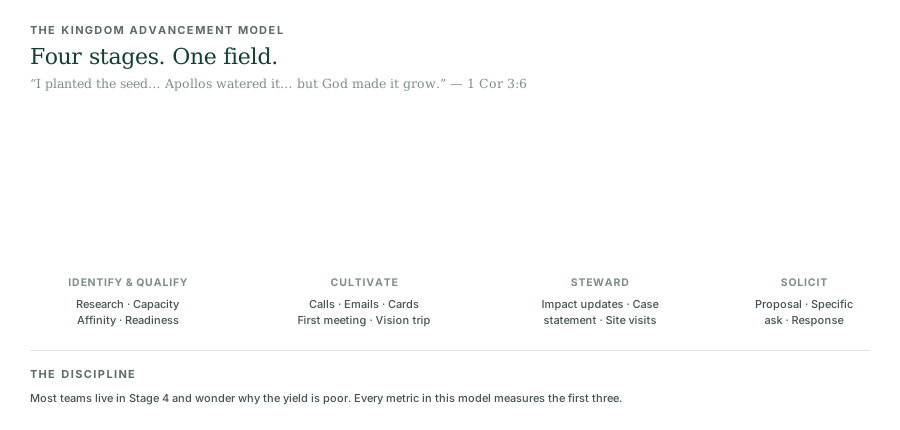
Four stages drawn from 1 Corinthians 3 — Know Your Field, Planting, Watering & Care, Harvesting — with metrics for each. Most teams live in the last stage and wonder why the yield is poor.
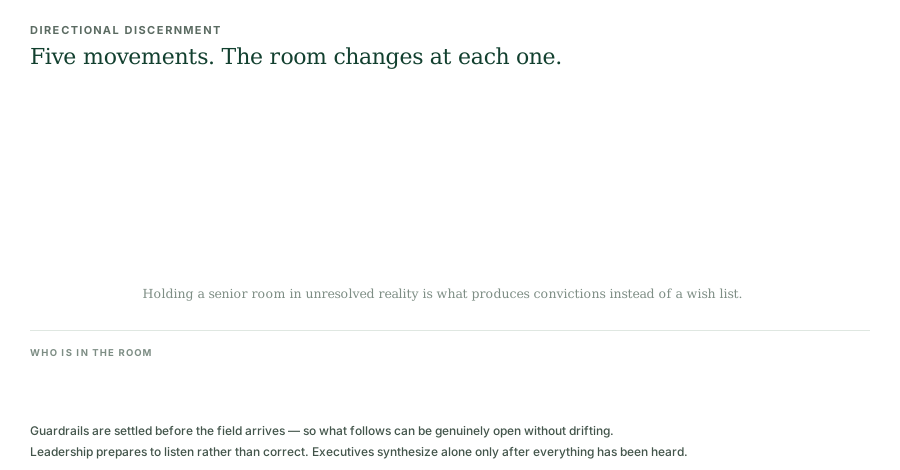
Five movements, with the room composition changing at each one and solutions forbidden for several consecutive days. Holding a senior team in unresolved reality is what produces convictions instead of a wish list.
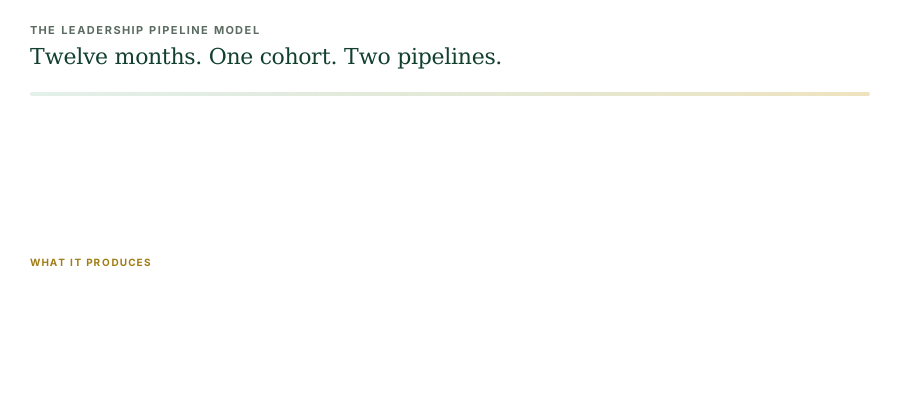
A twelve-month cohort producing two pipelines at once: named successors for your key roles, and vocational training tied to local employers — so staff development becomes community economic development.
Eight domains including the one nobody else scores: what a leader is avoiding, rated by the people who watch them avoid it. Clarity, Courage, Truth and Grace, Stewardship, Developing Others, Follow-Through, Formation, and a trust gate beneath all of it.
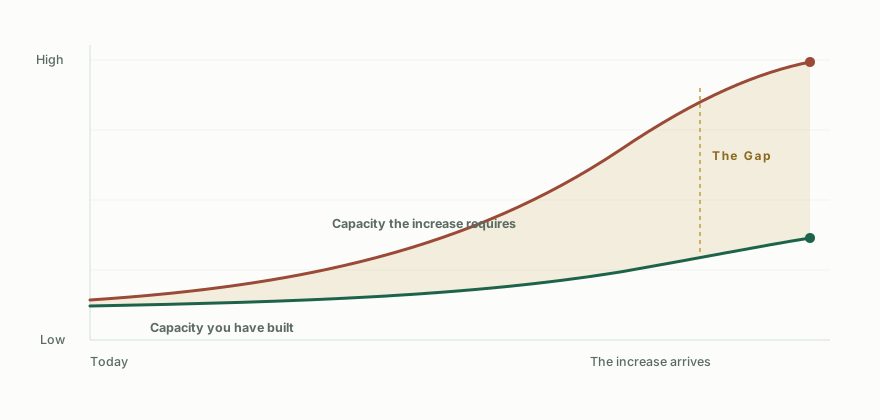
The distance between the capacity an organization has today and the capacity the increase would require. Every framework here exists to measure that distance, or to close it.
A gap is not a failure — it means the vision outran the machine, which is the right order. What costs organizations is not knowing how wide it is until something lands on it.
“A framework you cannot act on is just vocabulary.”
Each of these has an instrument, a workshop, or a handbook behind it. Start with whichever names the thing you are already carrying.